
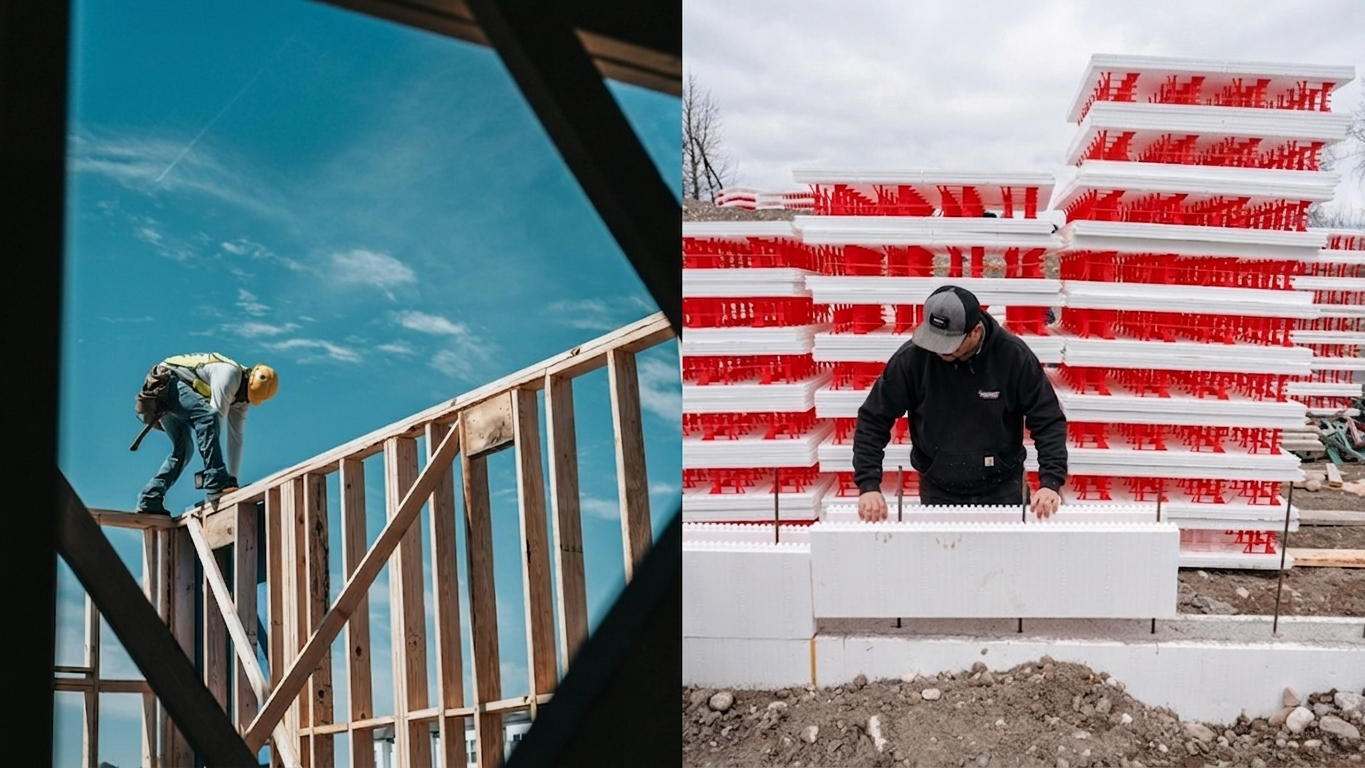
Between ICF vs wood framing, the answer is simple! In the case of a new house or a basement that will remain forever, the ICF construction method is the best option; however, wood framing construction is the alternative for extensions and limited budgets. Because Miller ICF sells Super Form insulated concrete forms to builders from the northern part of Ohio, we have a preference! However, we also have devoted partners that do wood framing every week.
What is the Difference between ICF and Wood Framing Construction?
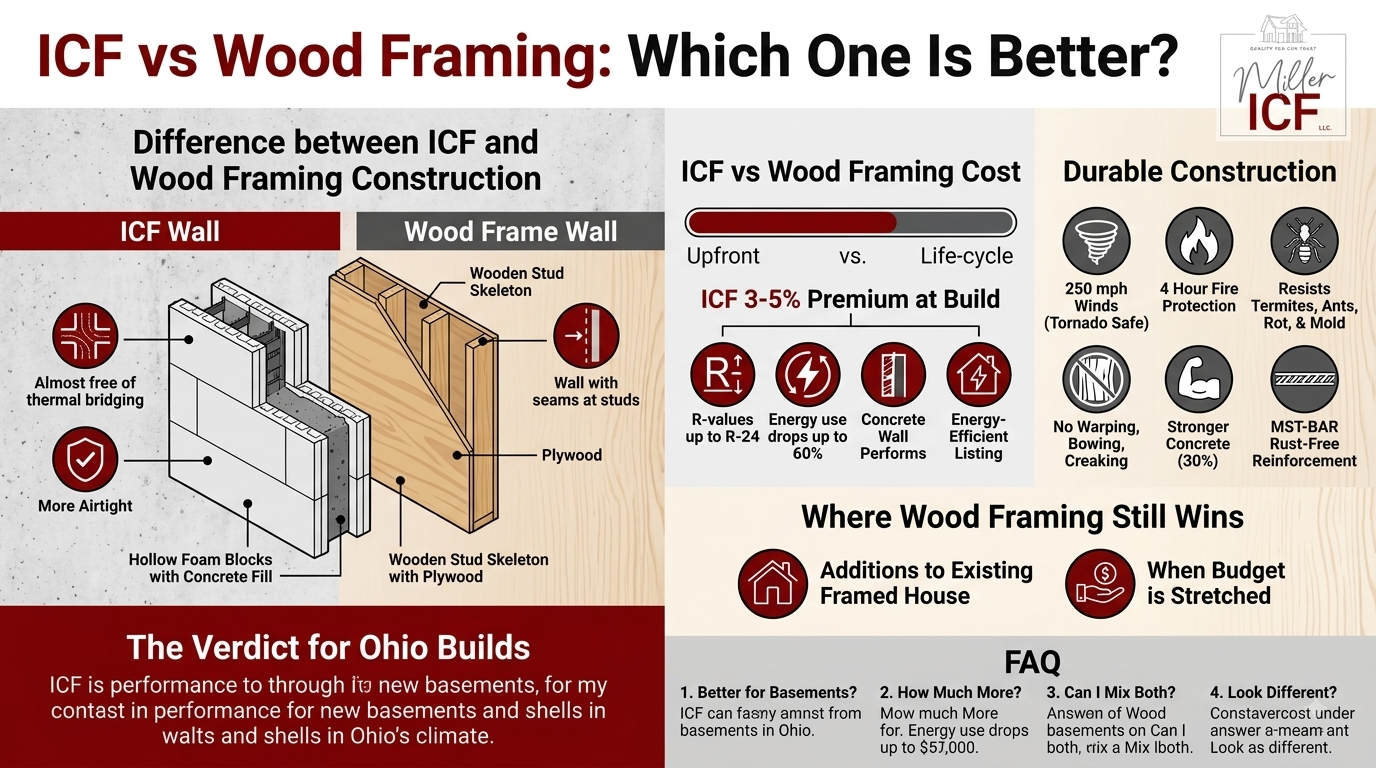
ICF construction builds a building using hollow foam blocks, plastic injected or with some other method, then they fill it with concrete, while in the case of wood frame construction, the frame-making method is used, which will involve using a skeleton of wooden beams, then filling it with plywood. The first method provides a solid, sealed concrete wall, while the second one will have a wall with seams (at each stud). The Department of Energy’s Building America program measured that difference in the field. Comparing ICF houses against otherwise identical stick-framed houses, it found the ICF walls almost free of thermal bridging and the houses about 10% more airtight.
That difference drives the whole ICF vs traditional construction debate. Among modern building methods, ICF is the one that folds structure, insulation, air sealing, and interior attachment into a single step. Here is how the SuperForm ICF building system handles each of those layers.
ICF vs Wood Framing Cost: What the Premium Actually Buys
The ICF vs wood framing cost gap runs about 3 to 5% at build time. That is the number that stops people, so put it next to what it buys. SuperForm walls reach R-values up to R-24 with no studs conducting heat through the assembly every 16 inches, and energy use drops by up to 60% compared to a conventional build.
ICF construction cost also behaves differently after move-in. A framed wall needs its insulation topped up, and its air leaks chased for the life of the house. A concrete wall just sits there performing, and buyers shopping for energy-efficient homes notice that on a listing sheet.
Durable Construction Is Where the Gap Gets Wide
Durable construction is the strongest case for concrete. SuperForm rates its walls for winds up to 250 mph and 4 hours of fire protection. That 250 mph figure is not arbitrary: FEMA tells builders to design residential safe rooms for 250 mph tornado winds no matter where in the country they are building. The material also shrugs off the things that quietly eat a lumber wall:
- Termites and carpenter ants find nothing to chew
- Moisture cannot rot a concrete core, and mold finds no food in foam or concrete
- Concrete does not warp, bow, or creak as the decades pass
- Road and weather noise dies in the mass, which is why ICF homes feel still inside
The concrete itself comes out ahead too. It cures inside the foam at a steady temperature and moisture level, which SuperForm rates about 30% stronger than concrete poured in stripped forms.
Wood framing spends its whole service life fighting water. Concrete does not, and when you pair it with MST-BAR fiberglass rebar, even the reinforcement inside the wall cannot rust. ICF walls are built for a service life past 100 years.
Where Wood Framing Still Wins
Wood frame construction beats ICF in two situations, and pretending otherwise would make the rest of this comparison worthless. If you are adding onto an existing framed house, matching the original structure is simpler and cheaper than tying concrete into lumber. And when a budget is stretched to its last dollar, wood’s lower upfront cost and the deep pool of carpenters who know it keep lumber the default.
For new basements and full shells, though, the benefits of insulated concrete forms hold up against every line item wood can offer.
The Verdict for Ohio Builds
So is ICF better than wood framing? For new walls in a state that swings from January ice storms to July humidity, yes. Ohio sits far enough into tornado country that the National Weather Service keeps a running tornado count for the state going back to 1950. The ICF benefits you pay 3 to 5% for at the pour keep working every year the building stands, and no lumber package can match that. Browse our gallery of finished SuperForm ICF walls around the region.
Weighing ICF vs wood framing for a project in North Central Ohio? Contact Miller ICF for a free estimate and a straight answer on whether ICF fits your build.
Frequently Asked Questions
1. Is ICF Better Than Wood Framing for a Basement?
ICF has its strongest point on the basement level. The walls underground are active in moisture resistance 24/7. Concrete with foam on both sides can defeat moisture in the soil much better than lumber in any form made waterproof, which is the reason why most ICF first projects are basements.
2. How Much More Does ICF Construction Cost Than Wood Framing?
About 3 to 5% upfront. Energy savings of up to 60% a year start working on that gap immediately, and a wall built for a century of service spreads the extra cost thinner every year you own the building.
3. Can I Mix ICF and Wood Framing in One House?
Yes, most ICF homes are just like that: insulated concrete forms are used for the basement and the exterior, and wood framing is used for the interior walls and roof. Miller ICF provides the proper instructions for each construction type.
4. Do ICF Homes Look Different From Wood Frame Homes?
No. The ICF walls are finished just like any other house using drywall, siding, stone, stucco, and so on. However, you will feel the difference in temperature and sound insulation while living in such a house.